World of Tanks Tutorial: Armor Angling, Sidescraping and Hull-Down Play
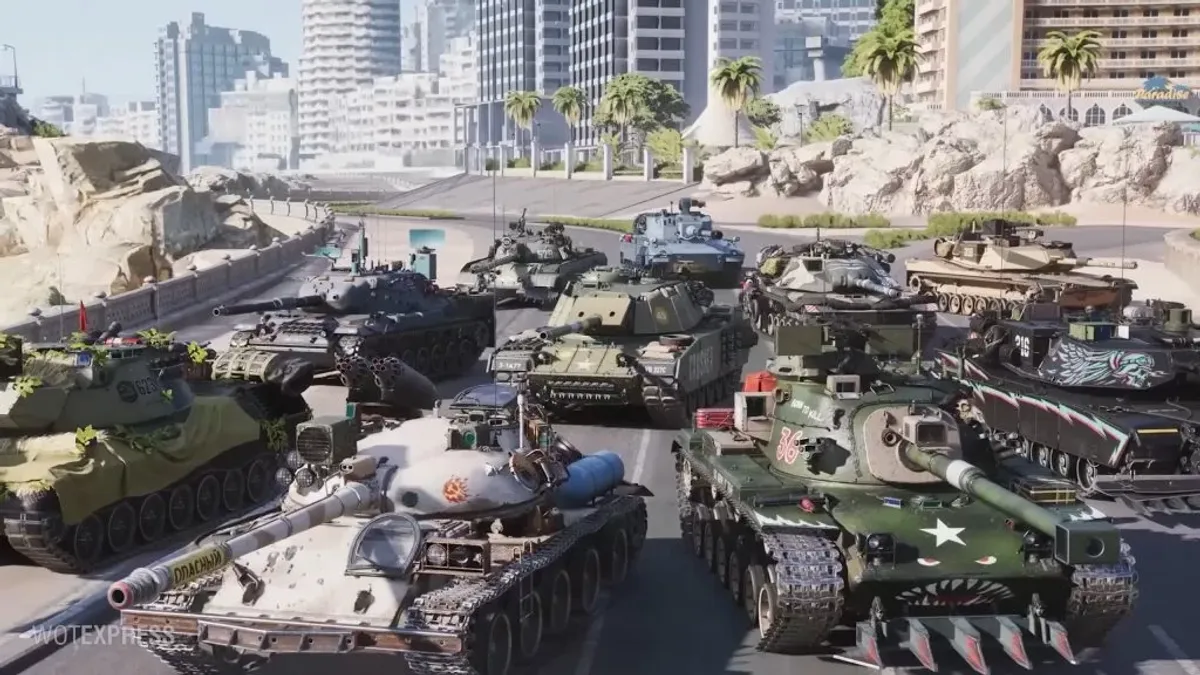 ANGLE YOUR ARMOR
Understanding armor is the biggest skill jump available in World of Tanks. Two players in the same tank can have very different results simply because one of them knows how to use their armor. This tutorial walks through the core mechanics.
How armor works
When a shell hits a tank, the game compares the shell’s penetration to the armor thickness it has to pass through. Two important ideas apply:
- Effective armor is the thickness the shell actually has to cross. If the plate is tilted away from the shot, the effective thickness rises.
- Normalization and ricochet change a shell’s path. Some shells turn toward the plate’s perpendicular on impact, and shells that strike at very shallow angles can bounce off entirely.
If the shell penetrates, it can damage modules, injure the crew, or deal hit point damage. If it does not, you take nothing.
Angling
Angling means rotating your hull so enemy shells hit at a steeper angle. It works well on tanks with sloped front plates, such as many heavies and some mediums.
How to angle properly
- Turn your hull slightly away from the enemy, so the front plate is no longer square to them.
- Keep your turret and gun on target if it has good traverse.
- Watch how much of your side is being shown. If you angle too far, your side armor or hull flank becomes the target.
- Adjust each time the enemy moves.
Overangling
Overangling exposes a weak side or a rear compartment. Always know where your thin plates are and avoid turning them toward the enemy.
Overmatch
Overmatch is a rule that makes large-caliber shells ignore ricochet and angled armor on thin plates. If the shell caliber is much larger than the armor thickness, the plate cannot bounce it. Practically, that means:
- Do not rely on angling thin side armor against large guns.
- Against tanks with small guns, thin plates can still ricochet effectively.
- Know the caliber of the gun you are facing, not just its penetration.
Sidescraping
Sidescraping is hugging a wall, building, or rock with one side of your tank so that the obstacle absorbs shells aimed at your side. It lets you fight while the enemy has trouble hitting you.
When it works
- On tanks with strong front armor but weak sides.
- In corridors where enemies can only see your front.
- When you want to peek and trade shots while remaining protected.
Risks
- Enemies on your other flank may hit your exposed side.
- Rubble and terrain can be destroyed by high-caliber shells.
- Your own movement is limited, so you must watch the minimap.
Hull-down play
Hull-down means placing your tank behind a ridge so that only the turret is visible. It is particularly strong on tanks with good gun depression and sturdy turrets.
| Feature | Good for hull-down | Poor for hull-down |
|---|---|---|
| Gun depression | High | Low |
| Turret armor | Strong | Weak |
| Turret weak spots | Few | Large cupola or mantlet gaps |
Check your tank’s gun depression in the garage. A tank with poor depression struggles on slopes, even when it seems like the right choice.
Shot trading and reload timing
Good armor use is also about timing:
- When the enemy has just fired, you have a window to peek and shoot.
- Showing the front plate while they reload is safer than doing so when their gun is ready.
- Retreat to cover while you reload.
- Do not fire if you cannot penetrate. Wait, reposition, or load a better shell.
Know your weak spots
Every tank has weaknesses such as the cupola, lower front plate, driver’s port, machine gun mounts, and rear. Learn yours so you can hide them, and learn your target’s so you can exploit them. Using the garage’s inspection tools or community resources can help you map them.
Choosing the right shell
- AP is the standard all-rounder.
- Premium rounds offer greater penetration but cost more.
- HE can damage even when it does not penetrate in some cases, and is useful against very thin armor or when you cannot get through.
Avoid wasting a shot at tanks you cannot hurt. Switch targets or reposition instead.
Practice routine
- Pick a tank with strong angling potential.
- In each battle, notice what hit you and where.
- Take a replay screenshot or note what bounced and why.
- Gradually increase how often you hold the front instead of retreating.
Closing
Armor in World of Tanks is a skill, not a stat. Learn your angles, respect overmatch, and use terrain as an extension of your hull. These mechanics apply to every nation and every tier, so time spent practicing will pay off across your whole garage.